top of page
.png)


Iceland
Editorials from Icelandic Transport Agency
About Iceland
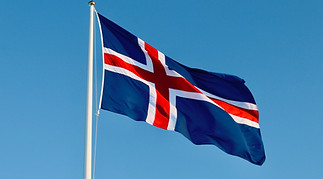
Iceland is the most sparsely populatedcountry in Europe. It was not until1974 that the so-called ‘ring road’ wascompleted, making it possible to drivearound the island. Aviation hastherefore played a very important roleas a means of public transportationin the latter part of the 20th century. Reykjavík is Iceland’s capital andlargest city.
Iceland Stats

7.8 mln in 2023
Arriving and departing passengers


182 in 2023
Aircraft on national register grand total
5 in 2019/2021
Number of airports
5 400 000 km2
Size of FIR
- 01Iceland’s unique geographical location in the North Atlantic and the large airspace Iceland controls through Iceland’s and Denmark’s Joint Financing Agreement administered by ICAO has long defined Iceland as a small nation with a big aviation sector. Located midway between Europe and North America, the country serves as a vital link connecting people, economies, and cultures across continents. As a central coordination point, Iceland plays a critical role in ensuring the safe, smooth, and efficient movement of aircraft through one of the world’s busiest oceanic airspaces. The story of Icelandic aviation began in 1919 with the country’s first flight. Since then, Iceland has developed a strong and resilient aviation sector, now a cornerstone of national infrastructure. Aviation supports tourism, trade, and economic growth, reinforcing Iceland’s position on the global stage. In 1944, Iceland’s commitment to safe and sustainable aviation was cemented when it became one of the original signatories to the Chicago Convention in 1944. Today, aviation remains essential to Iceland’s economy. The nation’s dramatic natural beauty attracts millions of visitors each year—most of whom arrive by air. As global aviation continues to evolve, Iceland stands ready to build on its legacy, bridging continents and shaping the skies of tomorrow.
- 02Iceland signed the Chicago Convention in December 1944 and participated in the foundation of ICAO. This is special in the light of full independence of the nation that was also realized in 1944. The importance of ICAO and international cooperation in the field of civil aviation was clear to the government of this new born republic. Successful history of ICAO and the milestones achieved for safe, efficient, convenient and sustainable aviation confirm this importance. This is still the case almost century later even though challenges are different and new emerge. Let ICAO unite us for the future good of aviation! The geographical location of Iceland translates into the vital importance of aviation, largely through one international airport. Aviation is therefore not only a key economical factor for growth and prosperity of Iceland, but also the main mode of transport across borders. Being an ambitious, albeit small nation of less than 400 thousand inhabitants, Icelanders makes up for their numbers with adaptability, swift reactions and short communication channels. Iceland has gained recognition abroad through decades of introducing, implementing and upholding international regulations in order to meet the highest levels of flight safety and operational efficiency and manages one of the largest air traffic control areas in the world. The greatest value for the development and maintenance of infrastructure is cooperation. And fruitful international collaboration in aviation, with states near and far, is an important factor of Iceland's well-being. In recent years, fluctuations due to external conditions have had considerable impact to Iceland. The consequences of the economic collapse in 2008 were immense, but the country recovered swiftly. This recovery can largely be attributed to an upswing in tourism via aviation, as the number of passengers at Keflavik Airport skyrocketed. Since then, the aviation industry, tourism and related activities have become a mainstay of the Icelandic economy. Two years after the economic collapse, the eruption of Eyjafjallajökull in Iceland caused great disruption to air travel in Europe and elsewhere for a period. Although of a different nature, the COVID-19 pandemic again revealed strengths and weaknesses of our understanding of infrastructure. Air freight volumes, which are considered as a lead indicator for overall economic performance, have endured heavy blows worldwide due to the pandemic. But even though air travel has experienced a temporary downturn, people still have the need and interest to travel airways between regions and countries. The challenges have been great and will in the near future need further care and a considerable effort to get fully back on track. All these diverse challenges, which aviation has seen in recent years, have had a substantial effect on global prosperity, not least the aviation industry. The lessons learned have confirmed the usefulness of placing scientific insights, thorough preparation, defined responsibility and considered measures at the forefront. Upon reflection one can see the value of e.g. increased emphasis on analysis and effective contingency planning and not least in the importance of risk-based measures. But first and foremost, the experience has proved the importance of efficient cooperation, shared knowledge and harmonized actions as the prerequisite to the restructuring of air transport. For a world separated by distance, oceans or conflicts, aviation is vital to unification and economic recovery. Let's fly again! Icelandic Transport Authority
- 03Iceland and the other Nordic counties have gone further than most other countries with regard to gender equal status and equal job opportunities for women and men. Equality is bound by law in Iceland with the aim of reaching all professions in society, and the aviation sector is no exception. In 1984, when all Icelandic air traffic controllers were men, a young woman graduated as a tower controller at Reykjavik Airport, the first of many to come. At that time the first female pilots were being recruited at Icelandair - the main airline in Iceland – and the first female flight data specialist started working in the Area Control Centre. It does not seem so long ago, but these pioneer women played a large role in decisive steps towards equality in aviation. It was as if the floodgates had been opened and during the years to come women were increasingly recruited as air traffic controllers, flight data specialists and pilots, first gradually and later in increasing numbers on equal terms with men. Isavia ANS, the air navigation provider in Iceland (here after ANS), has adopted a Gender Equality Program/Policy developed in accordance with the Gender Equality Act along with its parent company Isavia. The purpose of this policy is to ensure full equality between men and women in the workplace and to fully utilize the collective skills, strengths and know-how of both genders. All job advertisements encourage women and men equally to apply, and the company commits to paying the employees the same salaries for equivalent work which is reflected in the fact that Isavia has been awarded “Equal Pay Certification” for the past three consecutive years (ref) Every year the ratio between men and women at ANS is scrutinized with the aim of raising manager awareness of the gender balance in the company. Gender balance within the air traffic controller and flight data specialist professions is monitored closely due to the aforementioned historical reasons. Numbers from the 2008 - 2021 period show that a certain peak has been reached in the ratio of men and women amongst air traffic controllers, with women accounting for approximately 30%. The ratio is different with flight data specialists where women have reached a majority, or 60%. Upon review of the figures from past years it is clear that there is more work to be done despite existing legislation and goals. The challenge for the coming years is to further enhance and advertise air traffic controller job opportunities for women and to continue to monitor other jobs like flight data specialists to ensure that they do not become a single gender job. As the ratio between men and women has risen towards a balance amongst air traffic controllers and flight data specialists in Iceland, the same also applies to aviation corporate management. At ANS, women hold several managerial positions such as managers of procedures, safety, incident investigation, operations, finance and human resources. These facts indicate that gender equality in aviation in Iceland is reaching a balance that makes the industry less aware of whether the employers, managers and corporate directors are men or women. And the numbers are also consistent with the findings of the World Economic Forum, Global Gender Gap Report 2021, where it is stated that Iceland is the most gender-equal country in the world and has ranked number one for 12 years. Despite these promising trends and how proud the aviation industry in Iceland is regarding its achievements in gender equality, a constant monitoring and scrutiny is still needed. Corporate managers are aware of the importance of gender equality and are focused on not losing what has already been gained. Balance between the genders is considered a cornerstone of strong and prosperous operation and is a part of strategic management where equality is considered one of the key indicators for a positive economic and environmental results and future growth.
- 04The Icelandic Transport Authority receives an increasing number of inquiries regarding the operation of unmanned aircraft. Isavia ANS, the Icelandic Air Navigation Provider (here after ANS), has taken an active role in supporting projects with unmanned aircraft within the Icelandic Flight Information Region (BIRD FIR). An interesting example of this is a trial project on Remotely Piloted Aircraft Systems (RPAS) by the Icelandic Coast Guard (ICG), European Maritime Safety Agency (EMSA) and ANS. The purpose of the mission was to perform ICG duties inside the Icelandic Exclusive Economic Zone. The drone was based at Egilsstadir (BIEG) airport in the eastern part of Iceland during the summer of 2019. The drone, Hermes 900 from ELBIT, similar in proportions to a small airplane, has a flight endurance of 24 hours. ANS established areas for exclusive use by the drone while performing duties related to Icelandic sovereignty around Iceland. The ICG was able to use the drone instead of flying its own fixed wing aircraft or helicopters or sailing its vessels to locate oceanic pollution, monitor fishing vessels and other assignments. The project was a success and proved that savings in cost and CO2 emissions are possible. Another exciting project, a cooperation between ANS, the Norwegian Special Mission (NSM) and a Czech company Primoco UAV SE, was conducted in the summer of 2021 using an RPAS working within a defined area around BIEG from the 23rd to the 25th of August. The purpose of this project was to collect data to support the use of drones instead of airplanes, for flight testing of air navigation facilities and instrument fli ght procedures at airports. For comparison the drone, a Primoco One 150 model RPAS, flew the same routes as were previously flown by the ANS test aircraft. This is a project that will support changes in flight inspections for the future with savings in cost and CO2 emissions. Given the success of the previous projects, the ICG and EMSA are planning a similar mission for the summer of 2022 where an ICG vessel will have a drone on board while performing its duties. The drone, CAMCOPTER® S-100 from Schiebel, will be based on the vessel at the beginning of the project and will later also be based on land and flown out to sea, performing the same task as in the 2019 project. Considerable savings in cost and CO2 emissions are also expected as a result of this project.
- 05The world is focusing more and more on environmental issues. The Paris convention of 2015 set the goals and the world has been working towards them ever since. Isavia has published its environmental policy and is working in accordance with the United Nations (UN) priority targets for the UN Global Compact. Isavia Air Navigation Service (here after ANS) has been working on several improvements to reduce CO2 emissions and decrease fuel burn and noise pollution. AUTOMATIC DEPENDENT SURVEILLANCE BROADCAST (ADS-B) ANS was the first European ANSP to provide Air Traffic Control services to air transport aircraft, based on ADS-B. ANS now provides ATC services using space-based ADS-B and ground-based ADS-B and radars located at multiple sites in Iceland, the Faroe Islands, and Greenland, providing a unified surveillance coverage for the Reykjavik Control Area (CTA). The implementation of ground-based ADS-B in conjunction with direct controller pilot VHF voice communications enabled reduction in separation from 50 NM lateral and 15 minutes longitudinal to 5 NM target to target separation. With this implementation ANS was able to establish a transatlantic surveillance corridor bridging Europe and North America, delivering efficiency, safety, and environmental benefits. In the spring of 2022, the satellite-based ADS-B coverage will be expanded to cover the whole of the CTA with possibilities of implementing reduction in separation north of 70N from 23 NM lateral and 5 minutes longitudinal to 18 NM target to target separation. GLOBAL NAVIGATION SATELLITE SYSTEM (GNSS) Implementing separation procedures based on GNSS (RNAV/RNP) in the low-level airspace where lateral separation was decreased from 30, 50 or 120 NM to as low as 7, 15 or 20 NM has led to significantly better use of airspace where aircraft are more likely to get their optimum flight levels without delays. Fewer aircraft are now restricted to holding for separation purposes. DEVELOPMENTS AT KEFLAVIK AIRPORT (BIKF): Arrival manager (AMAN) and time-based arrival manager (TAMAN) Amended sequencing procedures using speed restrictions instead of vectoring or holding, supported by AMAN/TAMAN (an addition to the air traffic controller’s surveillance display) has led to more efficient use of airspace. Performance Based Navigation (PBN) Implementing Required Navigation Performance (RNP) Standard Instrument Departures (SID) and Standard Instrument Arrivals (STAR) at Keflavik supported with continuous operational descent. The implementation has led to aircraft being able to descend without stepped descent. Implementing RNP approach procedures with lower obstacle clearance altitude (OCA) than for the traditional approach procedures leads to fewer missed approaches due to weather. Noise abatement Flight procedures and the use of runways have been amended to reduce noise in the vicinity of Keflavik airport. Acoustic noise monitors have been placed at several locations at and around the airport. A web tracking system better enables the neighbouring communities to gauge noise levels and even submit complaints about specific flights. Heatmaps showing three months of flying to and from Keflavik airport: THE 2030 VISION FOR NORTH ATLANTIC (NAT) REGION The NAT 2030 vision contains potential improvements with the use of User Preferred Routings (UPR). ANS is a part of the Borealis Alliance, a collaboration of nine Air Navigation Service Providers (ANSPs) in northern Europe. Most Borealis members have been implementing Free Route Airspace (FRA) for a number of years. When fully implemented, the Borealis Alliance FRA Programme will enable aircraft operators to fly the most cost effective, fuel efficient and timely routes across the entire airspace managed by Borealis Alliance members, thereby reducing cost and greenhouse gas emissions. Steinunn Arna Arnardóttir, Manager ATS Procedures Isavia ANS
bottom of page